Buyers searching for PVC hose often send us a single line: "We need PVC hose, what's your price?" The problem is that PVC hose is not one product. It is a category. Ordering the wrong type because you skipped the application question does not just waste money — it means your hose fails in the field, and you're back to square one.
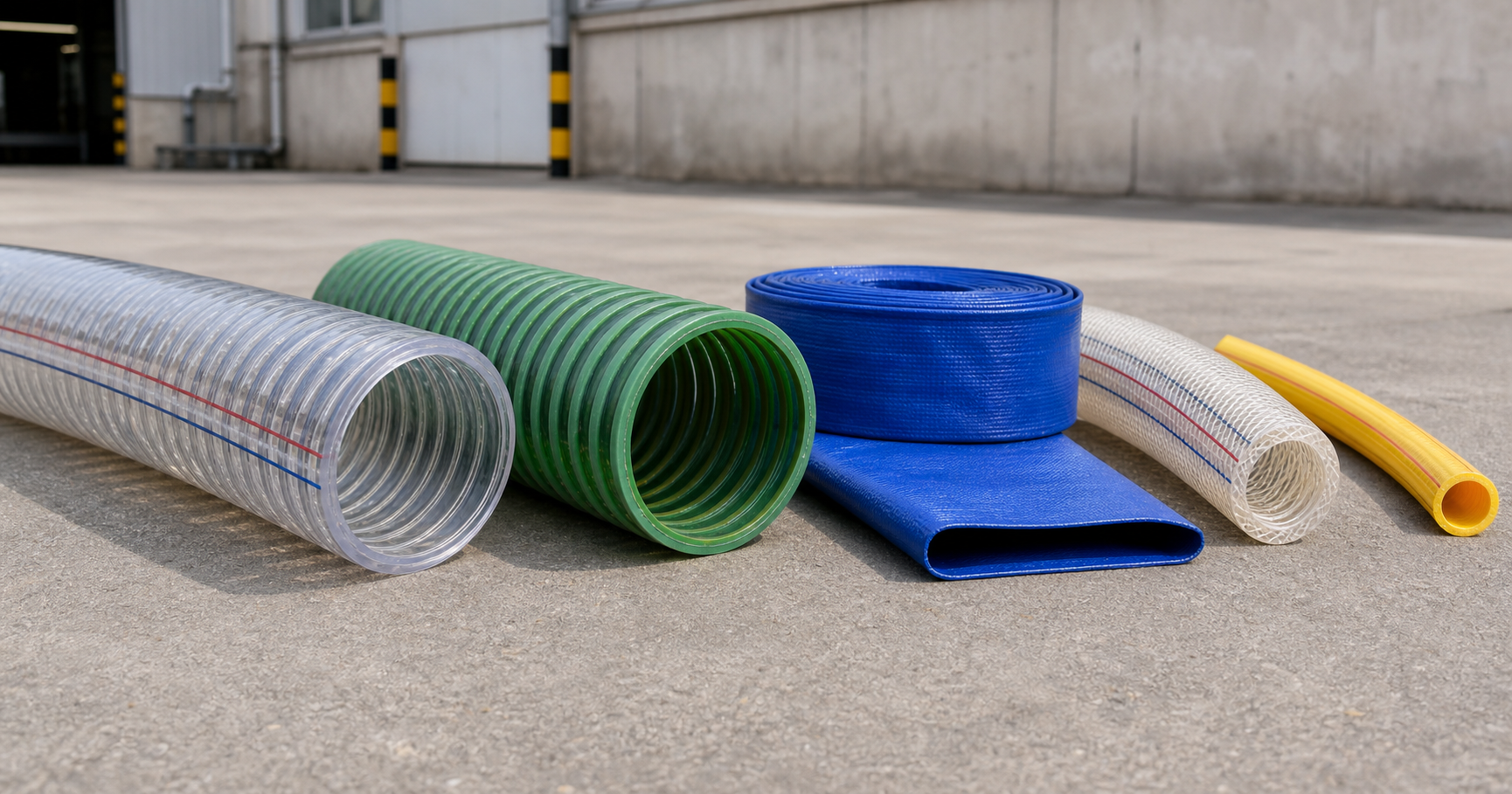
PVC hose refers to flexible tubing made from polyvinyl chloride, used to transfer water, air, chemicals, or granular materials across industrial, agricultural, and construction applications. The term covers at least five structurally different products. Each one is engineered for a specific pressure condition, flow direction, and working environment. Choosing the right type starts with one question: what are you actually doing with it?
Understanding what separates these types — and why those differences matter for buyers — is what this article is really about. Let's start with the basics, then work through each type and the selection logic behind them.
What Is PVC Hose, Really?
Most buyers already know PVC hose is flexible and affordable. What they often don't know is what's inside the wall — and that structure is what determines everything else.
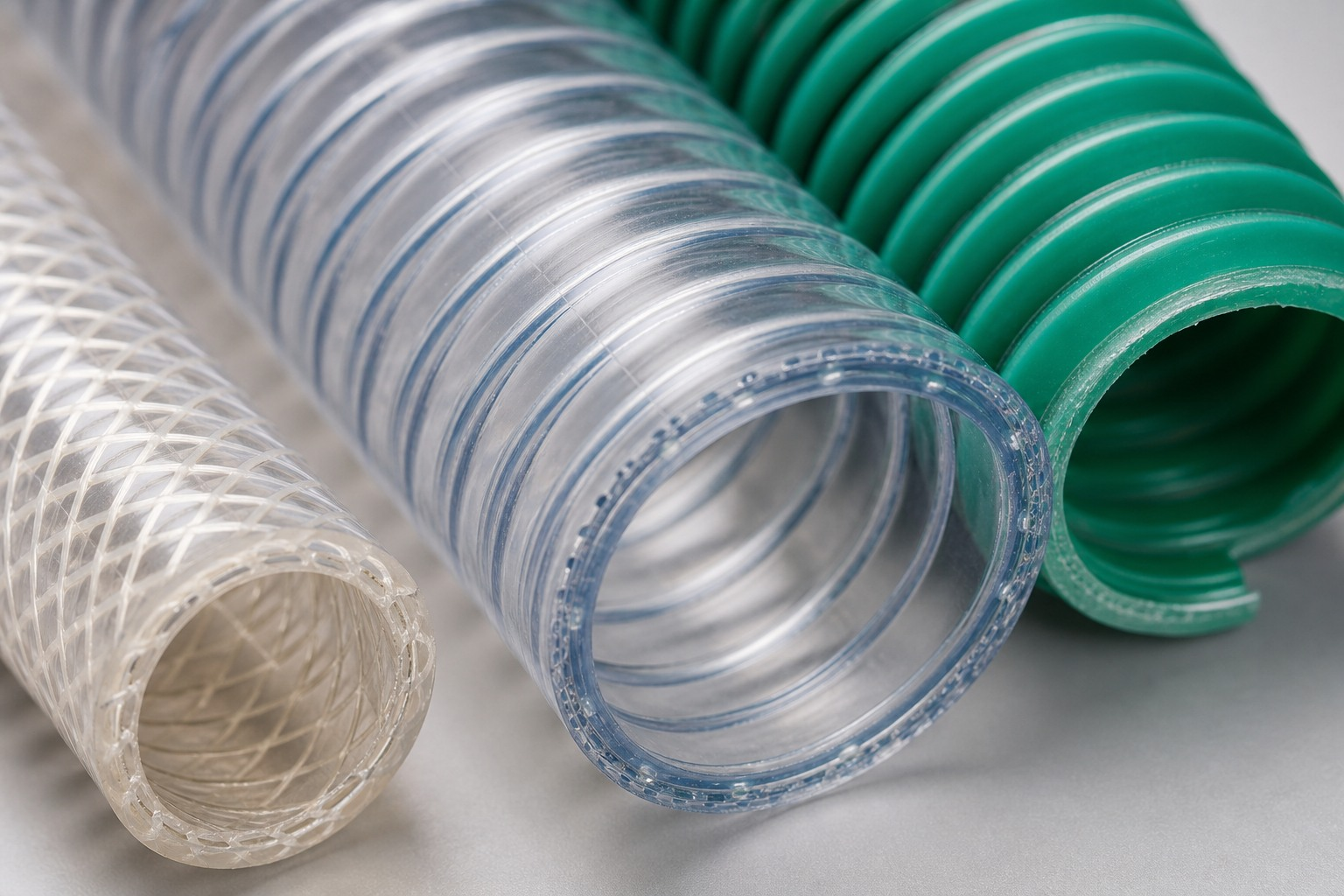
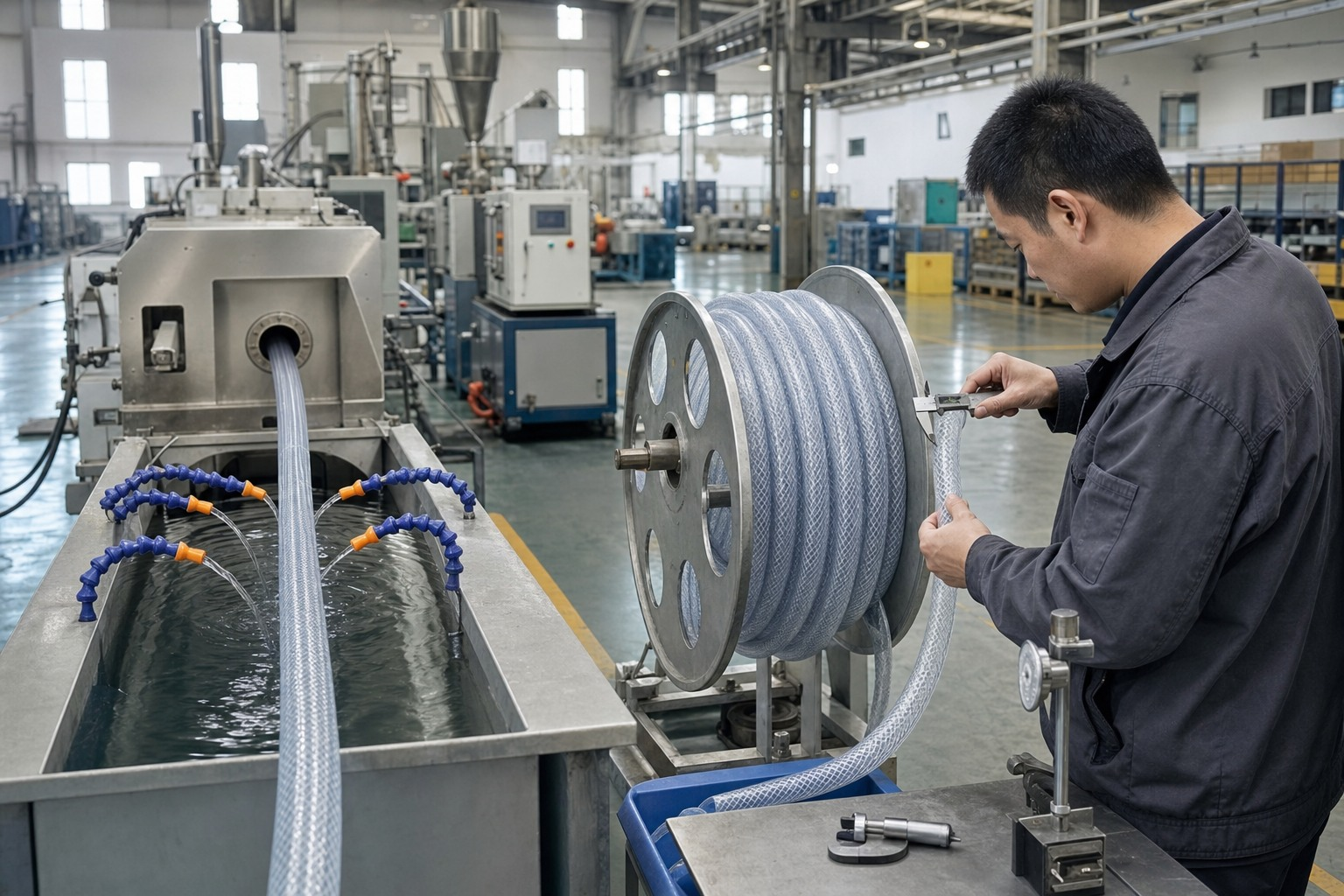
PVC hose is a flexible conduit built from a polyvinyl chloride compound, typically reinforced with one or more internal layers including fiber braiding, spiral wire, steel wire, or flat-wound coils. The wall construction determines pressure rating, collapse resistance, bend radius, and working temperature range.
Here is a plain breakdown of the basic structure:
- Inner tube: smooth PVC compound, defines chemical compatibility and flow resistance
- Reinforcement layer: polyester fiber braid, PVC spiral, or steel wire — this is what carries the pressure
- Outer cover: UV-resistant or abrasion-resistant PVC jacket
Why PVC Is So Widely Used
PVC dominates the commodity hose market for a straightforward set of reasons[^1]:
| Property | What It Means in Practice |
|---|---|
| Low raw material cost | Lower unit price than rubber or polyurethane hose |
| High flexibility at ambient temperature | Easy to route and store without stiffening |
| Chemical resistance | Handles water, dilute acids, fertilizers, light oils |
| Transparent options available | Operators can visually confirm flow |
| Wide size range | ID from 1/4" to 8"+ in standard production |
PVC is not the right material for high-temperature steam, concentrated solvents, or continuous UV exposure without a stabilized compound[^2]. But for the majority of water transfer, irrigation, and equipment connection use cases, it performs reliably at a cost that makes it the default choice worldwide.
What Are the Main Types of PVC Hose?
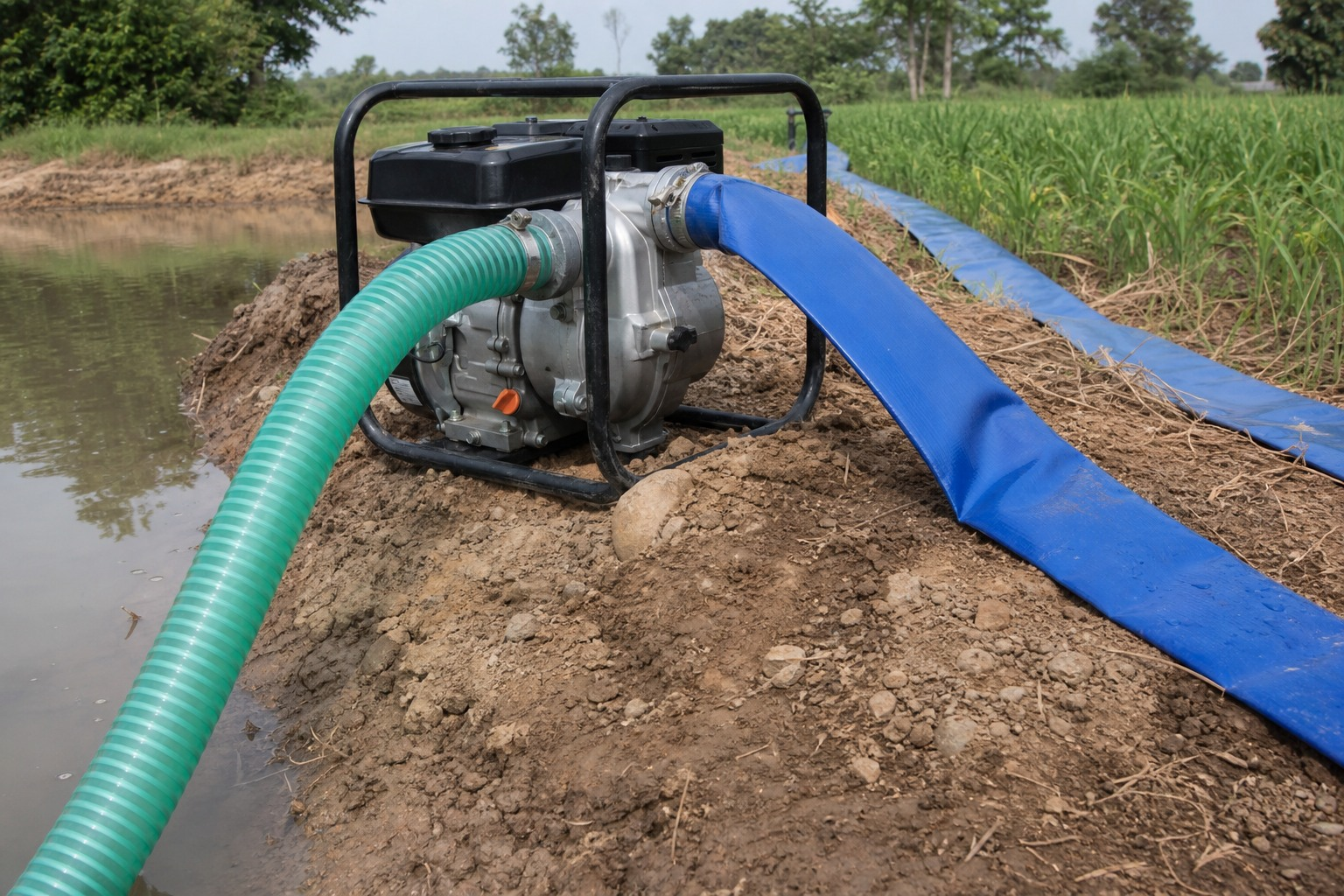
This is where buyers get into trouble. When someone asks me "which PVC hose do I need for my pump?" the answer depends entirely on whether the pump is pushing or pulling — and that one distinction maps to two completely different product types.
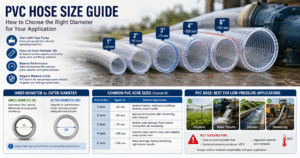
The five main types of PVC hose are: spiral suction hose, layflat hose, steel wire reinforced hose, garden hose, and spray hose. Each has a distinct internal structure matched to a specific flow condition, pressure direction, or application environment.
PVC Spiral Suction Hose
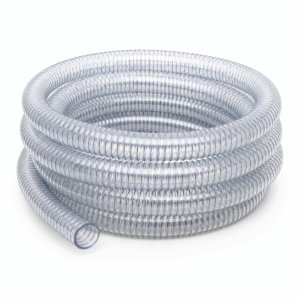
This is the type most often misidentified. Buyers see a thick, rigid-ish hose with a visible spiral coil and assume it is "heavy duty." What the spiral actually does is resist collapse under vacuum.
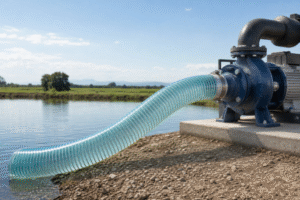
When a pump draws fluid toward itself, the pressure inside the hose drops below atmospheric pressure[^3]. A standard discharge hose would simply crush inward and kill the flow. The hard PVC spiral embedded in the wall maintains the hose's shape under that negative pressure. That is its entire engineering purpose.
What goes wrong when buyers get this wrong: They order a standard reinforced hose for a suction application, the hose collapses on the pump inlet after ten minutes, and they blame the pump.
Key specs to confirm for spiral suction hose:
- Vacuum rating (expressed in mmHg or inches of mercury, not just bar)
- Temperature range — PVC stiffens below 5°C and loses vacuum resistance
- Spiral pitch and diameter — determines minimum bend radius and collapse load
PVC Layflat Hose
Layflat hose is designed specifically for discharge only. It stores flat, rolls up easily, and deploys fast — which is why it dominates agricultural irrigation, firefighting support, and temporary dewatering on construction sites.
The critical thing buyers need to understand: layflat hose has zero suction capability. It is a discharge hose. Connect it to a pump inlet and it will flatten and stop flow immediately.
What to check before ordering layflat:
- Working pressure rating — standard agricultural layflat runs 6–10 bar; construction dewatering may need higher[^4]
- Coupling compatibility — layflat is typically fitted with aluminum or brass camlock couplings; confirm before ordering bare hose
- Roll length — standard rolls are 50m or 100m; custom lengths require confirmation with the factory
PVC Steel Wire Reinforced Hose
Steel wire reinforced hose is the pressure-rated workhorse of the PVC hose family[^5]. A helical steel wire is embedded in the wall — sometimes a single helix, sometimes double — and the result is a hose that handles both positive pressure and moderate vacuum, resists kinking, and maintains shape under high flow velocity.
This type is where I see the most specification mismatches in buyer inquiries.
The two numbers buyers always need to provide:
- Working pressure — the continuous operating pressure in bar or PSI
- Burst pressure — what the hose must survive under surge conditions
A rule of thumb: burst pressure should be at least 3× working pressure for general fluid transfer, and 4× for hydraulic or high-cycle applications. If a buyer tells me the working pressure without the burst requirement, that's half the information.
Bend radius matters too. Steel wire hoses have a minimum bend radius. Force one around a tight corner and the steel wire deforms, the hose kinks, and you have a failure point. Always confirm the minimum bend radius against your installation geometry before ordering.
PVC Garden Hose
Garden hose is a braided, lightweight hose designed for low-pressure water delivery — typically 8–12 bar burst, with working pressures well under 6 bar. It is not an industrial product. I am mentioning it here because buyers sometimes try to substitute it into light commercial applications where a reinforced hose is the correct choice.
Suitable for: domestic watering, car washing, light nursery work. Not suitable for: pump connections, continuous industrial use, or anything requiring a pressure rating above 6 bar.
PVC Spray Hose
Spray hose is a specialized lightweight hose used in agricultural spraying equipment — knapsack sprayers, boom sprayers, orchard sprayers. It is optimized for chemical compatibility with fertilizers, herbicides, and pesticides, and its small ID (typically 6–12mm) suits the low-flow, precise delivery requirements of spray nozzle systems.
The key selection factor here is medium compatibility. Not all PVC compounds resist agrochemicals equally[^6]. Always confirm the specific chemicals being handled with the manufacturer before ordering spray hose in bulk.
Where Is PVC Hose Commonly Used?
Application scenarios are the fastest way to map a buyer's need to the right product type.
PVC hose is used across agriculture, construction, industrial facilities, and equipment manufacturing for tasks including irrigation water delivery, dewatering, pump connection, fluid transfer, and chemical spraying. The correct product type depends on whether the application involves suction, discharge, pressure, or a combination.
Agriculture Irrigation
The dominant product here is layflat hose for main delivery lines and spray hose for chemical application. Spiral suction hose appears at pump inlets on mobile irrigation units. This is a well-matched three-product ecosystem — buyers who understand this can source all three from a single supplier and eliminate compatibility issues.
Construction Dewatering
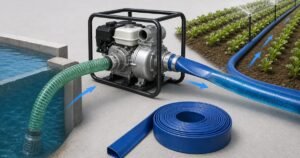
Dewatering pumps on construction sites require spiral suction hose at the inlet and layflat or steel wire reinforced hose on the discharge side. The pressure requirements are typically moderate, but the abrasion environment is harsh. UV stabilization on the outer jacket matters here.
Industrial Water and Fluid Transfer
Steel wire reinforced hose dominates. The application diversity is wide — cooling water circuits, process water supply, industrial cleaning equipment, transfer of non-aggressive chemicals. Buyers in this category almost always need to specify working pressure, medium type, and temperature range before a meaningful quotation is possible.
Equipment Connection
This is the OEM and workshop sector: connecting pumps, compressors, filtration units, and processing machinery. Products vary by application. The consistent need is dimensional accuracy and batch consistency — equipment manufacturers cannot tolerate diameter variation across supply batches.
How Do You Choose the Right PVC Hose?
The five selection criteria below are not a checklist to rush through. Each one represents a real failure mode when buyers skip it.
Choose a PVC hose by first confirming the application scenario (suction, discharge, or pressure transfer), then specifying inner diameter, working and burst pressure, temperature range, and environmental exposure. Skipping any of these creates a specification gap that leads to premature failure or incorrect product delivery.
Application: The First Question, Not the Last
When a buyer sends an inquiry without specifying what the hose is doing, the first thing I confirm is: is this suction or discharge? That single answer eliminates at least half the product options immediately. Every other parameter is secondary to this.
Inner Diameter
Undersizing ID increases flow velocity and pressure drop[^7]. Oversizing wastes money and creates loose connections. Always specify ID, not OD, and confirm the fitting standard you are connecting to.
Pressure Requirement
Skipping the pressure rating is the single most common sourcing mistake I see. Working pressure and burst pressure are both required. A hose rated at 10 bar burst but used continuously at 8 bar working pressure has a 1.25× safety factor — that is not adequate for industrial use.
Temperature
Standard PVC hose is rated for 0°C to 60°C[^8]. Outside that range, you need compound modifications or a different material entirely. Cold climates cause PVC to stiffen and lose flexibility[^9]. High temperatures cause softening and pressure rating loss. Neither failure is obvious until something goes wrong.
Working Environment
UV exposure, chemical contact, abrasion, outdoor storage — these all affect outer jacket compound selection. A hose that performs perfectly indoors can degrade in six months when used in an outdoor agricultural setting without UV stabilization.
Why Does It Matter to Work Directly With a PVC Hose Manufacturer?
This is not a section about factory features. It is about what fragmented sourcing actually costs you.
Working directly with a PVC hose manufacturer reduces sourcing risk by providing access to specification support, consistent batch quality, and the flexibility to adjust product parameters without restarting the supplier search. For distributors and project buyers, this eliminates the compounding delays and cost of sourcing incompatible products from multiple vendors.
Specification Support Is a Real Cost Saving
When a buyer submits a vague inquiry and a trading company processes it without asking the right questions, the wrong product ships. The buyer receives it, tries it, fails, and requests a replacement. That cycle — shipping, waiting, failing, re-sourcing — costs more than getting the specification right at intake. A manufacturer who asks the right questions at the inquiry stage is not slowing down the sale. They are preventing a return.
OEM Customization Without Re-Sourcing
For distributors building private label product lines, or equipment manufacturers with specific dimensional requirements, OEM capability at the factory level means you can adjust ID, OD, pressure rating, color, and jacket compound without switching suppliers. That consistency compounds over time — same tooling, same compound, same quality control baseline across every order.
Bulk Supply and Export Logistics
A manufacturer with export experience handles documentation, labeling, and logistics requirements that trading companies often delegate back to the buyer. For importers in regulated markets, this matters. Ask about test reports, compliance documentation, and shipping terms before placing the first order — not after.
Frequently Asked Questions
What is the difference between PVC suction hose and PVC discharge hose?
Suction hose is reinforced to resist internal collapse under vacuum pressure. Discharge hose is reinforced to contain positive pressure pushing outward. Using a discharge hose on a suction application will cause the hose to collapse and block flow. They are not interchangeable, even when the outer dimensions look identical.
Can PVC hose handle chemicals?
Standard PVC has good resistance to water, dilute acids, fertilizers, and light oils[^10]. It is not compatible with concentrated solvents, aromatic hydrocarbons, or high-concentration oxidizers. Always confirm the specific chemical medium with the manufacturer before ordering for chemical transfer applications.
What does the spiral wire in PVC suction hose actually do?
The rigid PVC spiral embedded in the hose wall acts as a structural support ring. It prevents the hose from collapsing inward when pump suction creates negative pressure inside the hose. Without it, the hose would flatten and stop fluid from reaching the pump.
How do I know what pressure rating I need?
Start with your system's maximum working pressure, then apply a safety factor of at least 3× for general water transfer, or 4× for hydraulic or high-cycle applications. The resulting number is your minimum burst pressure requirement. State both working pressure and burst pressure when requesting a quotation.
What inner diameter do I need for my pump?
Match the hose ID to the pump's inlet or outlet port diameter. Do not upsize or downsize without calculating the effect on flow velocity and pressure drop. For most pump connection applications, the hose ID should match the port size exactly, with coupling selection handled accordingly.
Conclusion
PVC hose is one of the most widely used fluid transfer products in the world — and one of the most commonly mis-specified. The core takeaway from this article is simple: PVC hose is a product category, not a single item. Spiral suction hose, layflat hose, steel wire reinforced hose, garden hose, and spray hose each exist because a different application demands a different structure.
Before you submit a sourcing inquiry, answer these three questions: What is the hose doing? What pressure is it handling? What is it carrying? Those three answers will get you to the right product faster than any price comparison will.
If you are a distributor, wholesaler, or direct buyer looking for a factory that can support your full PVC hose product range — from specification to bulk supply to export documentation — we are ready to help. Send us your application details, and we will work through the selection together.
[^1]: "Industrial Hose Market Size, Share & Trends", https://www.marketsandmarkets.com/Market-Reports/industrial-hose-market-8695843.html. Industry market analyses of the global flexible hose sector consistently identify PVC as the leading material by production volume in commodity applications, attributed to its low raw material cost and broad chemical compatibility relative to rubber and polyurethane alternatives. Evidence role: statistic; source type: research. Supports: PVC's dominant position in the commodity flexible hose market by volume or value. Scope note: Specific market share figures vary by report year and regional scope; the claim of 'dominance' should be qualified by geography and application segment. [^2]: "Long-Term Effect of Ultraviolet Irradiation on Poly(vinyl chloride ...", https://pmc.ncbi.nlm.nih.gov/articles/PMC6650850/. Polyvinyl chloride exhibits poor resistance to aromatic and chlorinated solvents, and its mechanical properties degrade at sustained temperatures above approximately 60°C; UV exposure without stabilizing additives causes chain scission and surface embrittlement over time. Evidence role: mechanism; source type: encyclopedia. Supports: The thermal and chemical resistance limits of polyvinyl chloride, including susceptibility to concentrated solvents and UV degradation. Scope note: Exact resistance thresholds depend on PVC compound formulation, plasticizer content, and stabilizer package; general material data may not reflect specific hose product performance. [^3]: "Collapse of Suction Tubing Under Prolonged Negative Pressure", https://www.researchgate.net/post/Collapse_of_Suction_Tubing_Under_Prolonged_Negative_Pressure_A_Clinical_Incident. When a centrifugal or positive-displacement pump creates suction, it reduces absolute pressure at the inlet below atmospheric; flexible hose without structural reinforcement will deform inward under this pressure differential, restricting or eliminating flow — a phenomenon governed by differential pressure mechanics and hose wall stiffness. Evidence role: mechanism; source type: education. Supports: The physical mechanism by which pump suction creates sub-atmospheric internal pressure capable of collapsing unreinforced flexible hose. Scope note: The magnitude of pressure drop depends on pump type, suction head, and fluid properties; collapse onset is also a function of hose wall thickness and modulus, which vary by product. [^4]: "Layflat Hose Buying Guide: Sizes, Pressure & Material Explained", https://trexirrigation.com/layflat-hose-buying-guide-sizes-pressure-material-explained/. Technical specifications for PVC layflat hose used in agricultural irrigation contexts, as referenced in irrigation equipment standards and supplier technical documentation, commonly cite working pressure ratings in the range of 6 to 10 bar, with burst pressures typically tested at 2.5 to 3 times the working pressure rating. Evidence role: statistic; source type: institution. Supports: The typical working pressure range of PVC layflat hose used in agricultural irrigation applications. Scope note: Pressure ratings vary by wall thickness, reinforcement type, and manufacturer; the cited range represents common commercial products and should not substitute for product-specific test certificates. [^5]: "PVC Steel Wire Reinforced Hose - StrongFlex", https://www.strongflex.com/project/pvc-steel-wire-hose/. The helical steel wire embedded in reinforced PVC hose functions as a continuous structural element that resists both radial expansion under positive internal pressure and radial collapse under external or vacuum loading; its continuous coil geometry also substantially increases resistance to kinking compared to fiber-only reinforcement constructions. Evidence role: mechanism; source type: institution. Supports: How embedded helical steel wire reinforcement enables PVC hose to resist both internal positive pressure and external compressive (vacuum) loading while reducing kink tendency. Scope note: Performance levels depend on wire diameter, helix pitch, steel grade, and PVC compound modulus; published performance data is product-specific and should be obtained from manufacturer test reports or independent laboratory evaluations. [^6]: "Pesticides impacts on human health and the environment with their ...", https://pmc.ncbi.nlm.nih.gov/articles/PMC11016626/. Research on plasticized PVC in contact with agricultural chemicals demonstrates that plasticizer type and concentration significantly affect solvent uptake, swelling, and mechanical property retention when exposed to herbicide and pesticide formulations; resistance is not uniform across PVC compound grades. Evidence role: mechanism; source type: paper. Supports: Variability in agrochemical resistance across different plasticized PVC formulations used in agricultural hose and tubing. Scope note: Published chemical compatibility data for specific agrochemical formulations and specific PVC compounds is limited; the general finding of compound-dependent resistance is well-established, but product-level compatibility requires manufacturer-specific testing. [^7]: "Hagen–Poiseuille equation", https://en.wikipedia.org/wiki/Hagen%E2%80%93Poiseuille_equation. By the continuity equation in fluid mechanics, flow velocity is inversely proportional to cross-sectional area at constant volumetric flow rate; a reduction in inner diameter therefore increases velocity and, per the Darcy-Weisbach relation, increases frictional pressure drop along the conduit length. Evidence role: mechanism; source type: education. Supports: The inverse relationship between pipe or hose inner diameter and flow velocity, and the effect on pressure drop. Scope note: The quantitative effect depends on flow regime (laminar vs. turbulent), fluid viscosity, and hose surface roughness; the directional relationship cited is universally applicable. [^8]: "Maximum Allowable Operating Temperature of PVC Piping ...", https://www.westlakepipe.com/technical-faqs/what-maximum-allowable-operating-temperature-pvc-piping-systems. Industry standards and manufacturer technical data sheets for plasticized PVC hose products typically specify a continuous working temperature range of 0°C to 60°C, beyond which plasticizer migration, stiffening, or pressure rating loss may occur. Evidence role: expert_consensus; source type: institution. Supports: The commonly accepted working temperature range of 0°C to 60°C for standard plasticized PVC hose. Scope note: The cited range reflects general industry convention; individual products may deviate based on plasticizer type and wall thickness, and low-temperature ratings can extend below 0°C with specialist compounds. [^9]: "Review of Recent Developments of Glass Transition in PVC ... - PMC", https://pmc.ncbi.nlm.nih.gov/articles/PMC8708294/. The flexibility of plasticized PVC is strongly temperature-dependent; as temperature decreases, plasticizer mobility is reduced, causing an increase in storage modulus and a corresponding reduction in elongation at break — a behavior well-documented in polymer science literature on PVC compounds. Evidence role: mechanism; source type: paper. Supports: The mechanism by which plasticized PVC increases in stiffness and loses flexibility at low temperatures. Scope note: The specific temperature at which stiffening becomes operationally significant depends on plasticizer type and concentration, which varies substantially across hose product formulations. [^10]: "PVC Chemical Resistance Guide", https://ipexna.com/wp-content/uploads/2022/08/chemical-guide-caen-ipex-pvc.pdf. Published chemical resistance tables for rigid and plasticized polyvinyl chloride, including those compiled by polymer institutes and plastics engineering references, consistently rate PVC as resistant to water, dilute inorganic acids, dilute alkalis, and aliphatic hydrocarbons, with ratings degrading for concentrated solvents and aromatic compounds. Evidence role: general_support; source type: institution. Supports: PVC's resistance to water, dilute acids, dilute alkalis, and aliphatic hydrocarbons (light oils). Scope note: Chemical resistance ratings apply to the base polymer; plasticized PVC hose compounds may exhibit different resistance profiles depending on plasticizer type, and resistance data should be verified for specific concentrations and temperatures.